

Company ski trip: how to plan one that works for everyone
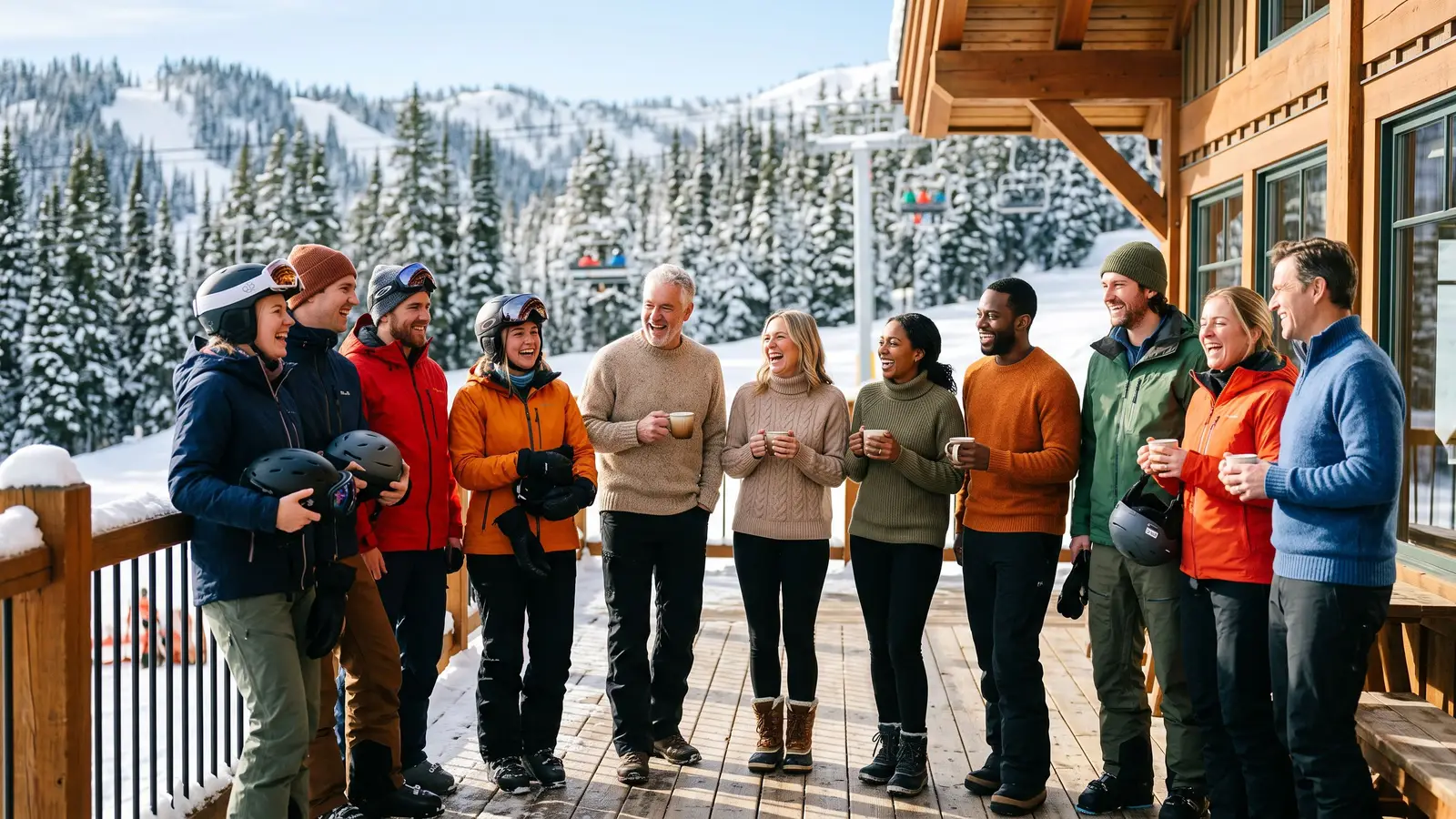
A company ski trip works when the skiing is optional and everything else is not: one easy flight, lodging that keeps the group together, a plan for people who never clip into skis, and an agenda that puts real work in the morning or evening and leaves the middle of the day for the mountain. If you want January to March dates, start now, because mountain venues for those weeks book in November.
Pick the resort town by flights and lodging layout
The snow report matters less than the trip in.
Score each candidate on four things:
- Door-to-lodge time from your main origin cities, including the drive from the airport in winter conditions.
- Lodging layout. One hotel or a cluster of lodges within walking distance beats rooms spread across a valley.
- A room that fits everyone for working sessions and one group dinner, ideally in the same building as the rooms.
- A walkable town so non-skiers and early finishers have somewhere to go without a car.
Utah and Colorado are the usual first looks for US teams, and you can compare towns on our Utah and Colorado pages or browse every option in corporate retreat locations. Park City is a common pick because Salt Lake City's airport is roughly 35 to 45 minutes away by road in normal conditions.
Next question: Which ski town is easiest to reach from a major airport?
Plan a company ski trip for skiers and non-skiers
Most teams are a mix: some confident skiers, some beginners and some people who would rather not ski at all. Plan three tracks from the start and present them as equal choices, not as "skiing" and "everything else".
- Skiers and riders: lift tickets, rentals if needed, and a meeting point for lunch.
- First-timers: a group lesson booked in advance, with rentals fitted the evening before.
- Off-slope: snowshoeing with a guide, a spa block, a cooking class, a sleigh ride or a town walk with coffee.
Give every track a similar spend, then regroup for a mountain lunch non-skiers can reach by gondola, an afternoon session and dinner.
Next question: Which group activities suit people who will not ski?
Ski school, rentals and lift tickets: the logistics
Most of the friction on a ski trip happens before 10 a.m. on day one. Remove it in advance.
- Collect sizes early. Height, weight, shoe size and ability level for anyone renting, plus whether they ski or snowboard. Check that the mountain allows snowboarding before you book a snowboarder there.
- Fit rentals the night before at the lodge or a shop that delivers.
- Book lessons as a private group where you can, so beginners learn together rather than with strangers.
- Buy lift tickets for the days people will use them.
- Brief everyone on mountain etiquette. The National Ski Areas Association's Your Responsibility Code lists ten points, including staying in control, yielding to people downhill, and not using lifts or terrain while impaired by alcohol or drugs.
Next question: What should you collect from each attendee before you book?
Liability and insurance: questions to check
This is not legal advice. It is the list of questions we make sure the company's own HR, legal and insurance contacts have answered before anyone books a lift ticket.
- Is skiing a company activity or free time? How you describe it in invitations and the agenda can matter for coverage. Ask your broker how your policies treat optional recreation on a work trip.
- What do the releases say? Lift tickets, rental agreements and lesson bookings usually carry their own terms. Read them and decide who signs what.
- Does your travel or medical cover include winter sports and, for trips outside the US, medical evacuation?
- Who is the emergency contact on site and does the organizer hold each attendee's emergency contact details?
- What are the venue's cancellation, attrition and weather terms? A storm that closes the pass is not always a force majeure event in a hotel contract.
Next question: Which contract terms should you ask a mountain venue about?
Altitude and cold-weather tips
Altitude catches more people than the cold does. The CDC's Yellow Book chapter on altitude illness says unacclimatized travelers sleeping at 8,000 feet or higher are at risk, and that about 25% of visitors sleeping above 8,000 feet in Colorado develop acute mountain sickness. Symptoms feel like a hangover, mainly headache, and usually start 2 to 12 hours after arrival.
What that means for your plan:
- Check the sleeping elevation of each town you shortlist, not just the summit height.
- Keep the first evening light and the welcome drinks modest. The CDC advises avoiding alcohol for the first 48 hours at high altitude.
- Put the hardest working session on day two, not on arrival night, and remind anyone with heart or lung conditions to ask their doctor first.
For the cold, the CDC's winter weather guidance recommends several layers of loose-fitting clothing, a hat, a scarf or knit mask, and water-resistant coats and boots. Redness or pain in the skin can be the first sign of frostbite, and people often do not notice because frozen tissue is numb.
Next question: What should attendees pack for a winter offsite?
An agenda that mixes work sessions with mountain time
A ski trip is still an offsite, and the work has to earn the travel. With more routine communication handled by AI tools and bots, the time in one room is where decisions and trust get built. Glean's Work AI Index 2026 found 52% of workers say it is easier to collaborate with AI than with their colleagues, which is a reason to protect the human part of the trip, not skip it.
A three-day pattern that works:
- Day 1, arrival: land by mid-afternoon, rental fitting, a short welcome session, an easy group dinner.
- Day 2: working session 8:00 to 10:30, mountain or off-slope tracks until about 3:00, a second session 4:30 to 6:00, dinner.
- Day 3: optional early ski or snowshoe, decisions session late morning with owners and dates, lunch, departures.
Ski lifts open early and the light fades by late afternoon in January, so build around the mountain's hours.
Next question: What does a full 3-day offsite agenda look like?
Budget drivers for a mountain retreat
The lines that move the total most:
- Dates. Holiday weeks, the long weekends in January and February and spring-break weeks are the priciest. Midweek dates in early January or early March are usually kinder.
- Lodging. Slopeside rooms cost more than in-town hotels with a shuttle. Decide whether ski-in, ski-out matters for your group.
- Lift tickets. Window prices at large resorts are high; pre-purchased or group tickets for the days people actually ski help.
- Rentals and lessons for beginners, often forgotten in the first estimate.
- Ground transport from the airport in winter, which may need larger or four-wheel-drive vehicles.
Run your headcount and nights through our offsite cost calculator to get a first range before you talk to venues.
Next question: What does a corporate retreat cost per person?
Booking timeline for a January to March trip
- Now (November): set dates, headcount and budget; shortlist two or three towns; request venue options.
- Within two weeks: sign the venue and room block; send the save-the-date.
- Six to eight weeks out: registration form with ski ability, sizes and preferences; book lessons and activities.
- Three weeks out: rooming list, transfers, packing list and the Responsibility Code.
- Week of: confirm rentals, weather plan and the on-site contact.
Next question: How quickly can you get mountain venue options and prices?
How Offsiteio can help
Offsiteio plans company retreats end to end, including mountain trips: venue options, rooms, meals, lift tickets, rentals, lessons, off-slope activities, transfers and the agenda, quoted as one itemized price per person from about $999 per person, excluding flights, with optional on-site coordination and 24/7 support. Get a free, itemized proposal in days, with no commitment.
FAQ
How far ahead should we book a company ski trip?
For January to March, start in November. Holiday weeks and long weekends fill first, so be flexible on midweek dates if you are booking late.
What if most of the team does not ski?
Plan the trip around the group, not the slopes. Offer lessons, an off-slope track and shared moments like a mountain lunch and dinner, and give each track a similar budget.
Is altitude a problem for a short team trip?
It can be. The CDC puts the risk threshold at a sleeping altitude of about 8,000 feet, so check where you will sleep, keep the first night light and avoid heavy drinking on arrival.
Does the company need special insurance for skiing?
Ask your insurance broker and legal team before you book. Confirm how optional recreation on a work trip is treated, what releases attendees sign and whether travel cover includes winter sports.